

How Iowa Business Owners Can Get Energy Rebates When Building or Renovating a Commercial Space
Most Iowa business owners building or renovating a commercial space focus on what the project costs. Very few think about what it can pay back.
MidAmerican Energy and Alliant Energy, the two primary utilities serving the Des Moines metro and surrounding Iowa communities, both operate commercial rebate programs that put real money back into the hands of building owners who design for energy efficiency from the start. Des Moines University received nearly $1.2 million in construction rebates after participating in MidAmerican’s Commercial New Construction program for their West Des Moines campus. That is not a number you can ignore.
The programs are not complicated, but they have requirements that catch business owners off guard when they try to apply too late. The most important one is this: you have to engage with the utility program before your design is finished, not after construction is complete. Walk in after the fact and there is no rebate to collect.
This guide explains how both programs work, who qualifies, what amounts you can expect, how the process fits into a typical commercial construction timeline in Iowa, and what to do right now if you have a project on the horizon.
Why Energy Rebates Are Worth Your Attention Before You Break Ground
The case for energy efficiency in commercial buildings is straightforward when you look at the numbers over time. Operating costs for commercial buildings, including electricity, natural gas, and mechanical maintenance, are one of the largest ongoing expenses a business carries. The decisions made during design, about insulation levels, HVAC system type and capacity, lighting systems, and building envelope performance, lock in those costs for the life of the building.
A commercial building designed to current energy code standards will perform better than an older building, but it will still consume significantly more energy than a building designed with efficiency as a primary goal. The gap between code minimum and optimized performance is where the rebates live.
Alliant Energy’s commercial new construction rebate ranges from six cents per kilowatt-hour for five percent energy savings above the Iowa Energy Code up to seventeen cents per kilowatt-hour for forty percent energy savings. The more efficiently you build, the more you earn back.
MidAmerican Energy’s Commercial New Construction program gives building owners complimentary energy design assistance and financial incentives to help make implementing energy-efficient strategies more affordable. Each service level provides a construction rebate paid to the building owner based on annual electric and/or gas savings modeled and verified after installation.
Both programs also cover the cost of the design assistance itself through design team rebates paid to your architect or engineer for participating in the energy modeling process. This means the expertise required to qualify for a rebate does not have to come out of your architecture budget.
Who Provides Commercial Energy Rebates in Iowa
The rebate program you use depends on which utility provides power to your building.
MidAmerican Energy serves Des Moines, Ankeny, West Des Moines, Ames, Council Bluffs, Sioux City, and much of western and central Iowa. If you are building in the Des Moines metro, MidAmerican is very likely your electric utility. Their Commercial New Construction program is the one most relevant to Iowa business owners in the Happe Commercial service area.
Alliant Energy serves eastern and central Iowa including Cedar Rapids, Iowa City, Waterloo, Marshalltown, and surrounding communities. Their Commercial New Construction program operates on a nearly identical model to MidAmerican’s. If Alliant serves your building location, the same general logic applies and the same pre-design engagement rule holds.
Iowa’s agricultural heritage creates a specific risk that catches out-of-state buyers and even some in-state buyers who are not paying attention. Agricultural zoning designations extend deep into suburban fringe areas. A rezoning can take 6 to 12 months. A site that looks like it is in the path of commercial development may still carry agricultural zoning that makes your intended use impossible without a rezoning process that adds months to your timeline.
Both programs are administered through program implementation partners including Willdan Energy Solutions and Franklin Energy. When you fill out the interest form, you are connecting with those implementation contractors who walk you through the process.
MidAmerican Energy's Commercial New Construction Program: How It Works
MidAmerican’s Commercial New Construction (CNC) program for commercial and multifamily buildings gives you complimentary energy design assistance and financial incentives to help make implementing energy-efficient strategies more affordable. The program offers four different service levels tailored to serve a variety of projects and energy efficiency goals.
Here is what each service level looks like in practice.
Streamlined Service (Buildings over 3,000 sq ft)
Streamlined service is designed for simpler projects where detailed energy modeling would be disproportionate to the project scope. You work through an online tool that guides you through a series of questions about your building type and intended systems. The tool identifies applicable energy efficiency strategies and qualifies the project for incentives based on those selections.
This is a reasonable starting point for smaller retail, office, or flex space projects where your design team does not have a complex mechanical system configuration to optimize. The online application is available at streamlined.iowacnc.com. A design team rebate is included to offset participation costs.
The problem is that this sequence consistently produces projects where the design comes back from bid significantly over budget, and the owner has to pay for redesign or value engineering to get back to a number that works. Waiting too long to hire a general contractor for your commercial project can lead to unnecessary challenges, including a higher risk of budget overruns, design features that are difficult to construct, and schedule delays that could have been prevented with better coordination from the start.
Standard Service (Buildings over 5,000 sq ft)
Standard service involves a program consultant working directly with your design team through collaborative design meetings. The consultant uses live, interactive energy modeling software to evaluate up to three different mechanical system options and dozens of applicable energy efficiency strategies.
This is where most mid-size commercial projects in the Des Moines metro, including office buildings, retail centers, light industrial facilities, and multi-family projects, will land. Your architect and mechanical engineer are involved in the process, and the modeling outputs give you a defensible basis for the design decisions you make. The construction rebate is calculated from the verified annual energy savings, and a design team rebate offsets the architecture and engineering time required to participate.
To get started on Standard service, submit the interest form atenergyassistance.willdan.com/Application-CNC.
Enhanced Service (Buildings over 5,000 sq ft, targeting 40%+ energy savings)
Enhanced service goes further than Standard and is appropriate for projects pursuing net-zero energy, net-zero carbon, LEED certification, or the Living Building Challenge. In addition to evaluating mechanical systems and efficiency strategies, Enhanced service includes daylighting analysis, operational carbon analysis, solar PV analysis, and mechanical system life cycle cost analysis.
If Happe Commercial is building a multi-family housing project or a larger office development where sustainability certification is part of the value proposition, Enhanced service is the track that gets you there with financial support rather than just certification costs.
Multifamily Service (Buildings over 5,000 sq ft)
Multifamily service provides energy efficiency consulting to identify cost-effective energy efficiency strategies to improve your bottom line and increase tenant satisfaction. Low-income multifamily projects are eligible for a 50% bonus incentive to the construction rebate.
For developers building market-rate apartments, mixed-use housing, or workforce housing in the Des Moines metro, this program provides both the design assistance and the financial incentives that make energy-efficient construction choices pencil out financially, not just environmentally.
What to do instead: Build the permit timeline into your project schedule before you make any occupancy commitments. For a standard commercial build in the Des Moines metro, add 8 to 14 weeks of permitting time between design completion and the start of construction. For projects with zoning complexity, add more. And conduct an informal pre-application meeting with the relevant building department before submitting, a step that consistently saves weeks by identifying local requirements before they become correction letters.
How Much Can Iowa Business Owners Actually Receive?
This is the question every business owner asks, and the honest answer is that it depends on how much energy savings the building design achieves compared to code baseline.
The rebate calculation works on a per-unit-of-energy-saved basis, verified after construction through energy modeling that the program consultants conduct. The DMU case mentioned above, at nearly $1.2 million in construction rebates, reflects an aggressive energy efficiency strategy on a large campus project. A more typical mid-size commercial building in the Des Moines metro will generate a more modest rebate, but the amounts are still significant relative to the cost of the efficiency measures that earn them.
Here is a realistic way to think about it for planning purposes:
A 10,000-square-foot office building that achieves 15 percent energy savings above Iowa Energy Code might generate a construction rebate of $15,000 to $40,000 depending on the specific measures implemented and the energy mix of the building.
A 30,000-square-foot flex industrial building designed to 25 percent better than code could generate $50,000 to $120,000 in construction rebates.
A 100-unit multi-family project pursuing 30 percent better than code performance could generate rebates in the $150,000 to $350,000 range.
These are illustrative ranges, not guarantees. The actual rebate depends on the energy modeling results for your specific building, which is exactly why program engagement during design is so important. The program consultant runs the numbers and shows you what design choices earn what rebates before you commit to them.
Rebates and incentives from MidAmerican are issued on a first-come, first-served basis and are offered until approved funds are exhausted or through December 31, 2026, whichever comes first. Fund exhaustion is not just a legal formality. These programs do run out of funding in active building markets. Engaging with the program early in your project is not just better for the design process. It also protects your rebate eligibility before the allocation runs out.
The Step That Most Iowa Business Owners Miss
This one is expensive in a way that most business owners do not fully appreciate until they experience it.
Every decision made during the design phase is essentially free. Moving a wall on a drawing takes an hour of architectural time. Changing a light fixture specification takes a phone call. Relocating a plumbing chase takes an afternoon of coordination between the architect and the mechanical engineer. None of these changes cost construction money because nothing has been built yet.
All commercial new construction projects, including multifamily new construction, must participate in the Commercial New Construction program in order to receive rebates through MidAmerican Energy.
That sentence matters more than most business owners realize. You cannot build a commercial building in MidAmerican’s service area, make energy-efficient design choices, and then apply for a rebate after the fact. Participation in the CNC program is required, and that participation needs to start while your project is still in the design phase.
To qualify, your new commercial or multifamily project must be new construction, an addition, or a major renovation that includes heating and cooling replacement, early enough in the design process to implement energy analysis results, and heated and/or cooled by MidAmerican in Iowa or Illinois.
“Early enough in the design process to implement energy analysis results” is the operative phrase. The program consultants need to be able to influence the design, not simply document it after the fact. If your mechanical engineer has already specified the HVAC system and your architect has finalized the envelope design before you submit the interest form, there is no room for the energy modeling to change anything, and you will likely not qualify.
The practical takeaway is this: submit your CNC interest form when you have a building program and a site, but before your design team has locked in mechanical systems, envelope specifications, or lighting design. That window, roughly concurrent with schematic design, is where the program creates the most value and where your eligibility is solidest.
How This Fits Into a Typical Iowa Commercial Construction Timeline
For context on how program engagement fits into a real project schedule, here is where the CNC process maps onto the construction phases covered in our Iowa commercial construction timeline guide.
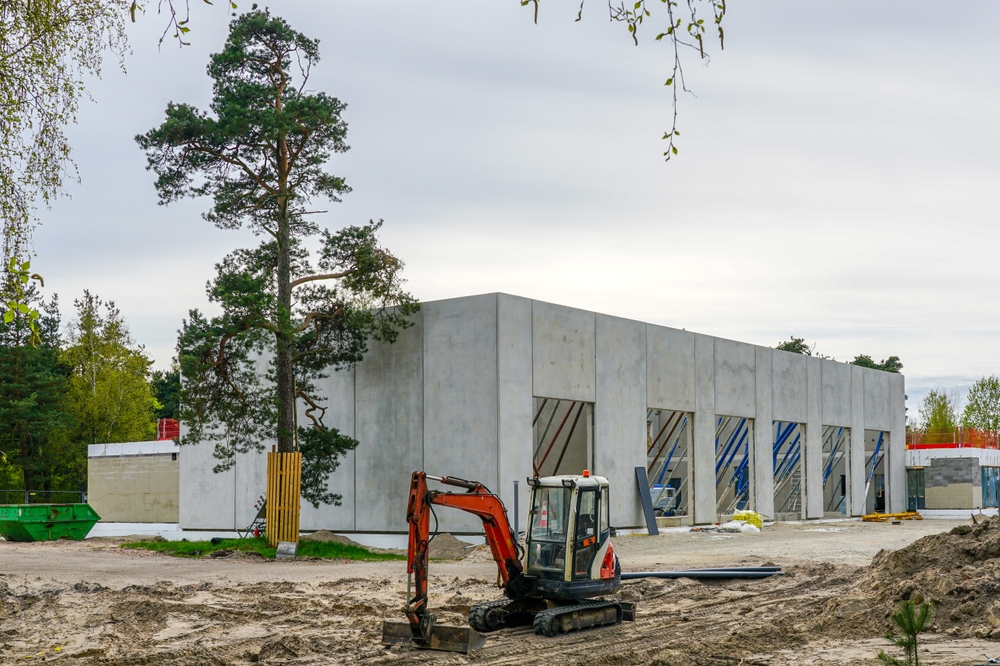
On a well-prepared suburban commercial lot in Ankeny or Urbandale with utilities already stubbed to the property line, site work for a modest commercial project might run $75,000 to $150,000. On a raw site at the suburban fringe with a long utility run, a drainage challenge, or soil that requires significant grading, that number can reach $300,000 to $600,000 before the foundation is poured.
Pre-design phase (weeks 1 to 6): Confirm site, engage design team, confirm which utility serves the building. This is the time to identify whether MidAmerican or Alliant serves your address and to pull up the appropriate program interest form.
Schematic design (weeks 3 to 10): Submit the CNC interest form. The program consultant is assigned and the initial design meeting is scheduled. Mechanical system options and major envelope decisions are still open. This is the ideal window.
Design development (weeks 8 to 18): Energy modeling runs with your design team. The consultant evaluates system options and identifies the strategies that earn the most rebate per dollar of added construction cost. You make design decisions with rebate implications visible.
Construction documents (weeks 14 to 24): Designs are finalized incorporating the agreed energy efficiency measures. The construction rebate amount is established based on the modeled savings. Design team rebate is documented.
Construction and verification (months 4 to 18+): Building is constructed per plans. After construction, the program conducts verification to confirm the specified measures were installed as designed.
Rebate payment: Construction rebate is paid to the building owner after verification. Timeline from completion to payment varies but is typically within a few months of verification completion.
The key point is that steps one and two, identifying the program and submitting the interest form, need to happen during the design phase of your project. They do not happen during construction. If you are reading this with a project already under construction, call the program line to understand your options, but do not expect the same rebate levels available to projects that engaged during design.
What About Iowa's Other Energy Incentive Programs
The CNC program is the most significant rebate opportunity for new commercial construction in Iowa, but it is not the only one worth knowing about.
Nonresidential Energy Solutions (MidAmerican)
For existing commercial buildings undergoing renovation, MidAmerican offers the Nonresidential Energy Solutions program, which provides custom rebates on energy-efficient upgrades to HVAC, lighting, building controls, and other systems. These projects require pre-approval before equipment purchase and installation. This program is relevant if you are doing a commercial renovation that involves replacing major building systems but does not rise to the level of a major renovation qualifying for the CNC program.
Business Energy Solutions (Alliant)
Alliant Energy’s Business Energy Solutions program provides free energy audits and rebates on qualifying HVAC, refrigeration, and lighting upgrades to Iowa business customers who receive electric service from Alliant Energy. More than 400 businesses have used this program to reduce energy costs. Rebates pay a fixed amount for tuneups and up to 70 percent of project costs for lighting and refrigeration retrofits directly to your contractor. This is primarily a program for existing buildings rather than new construction, but it is worth knowing about for clients who own existing facilities and are upgrading systems.
Custom Rebates (Alliant)
Alliant Energy offers custom rebates for projects that do not fit standard prescriptive rebate categories. Before installation, projects must be preapproved by Alliant Energy. For combined heat and power systems, Alliant will reimburse 50 percent of a preapproved feasibility study cost, up to $7,500. This is relevant for larger industrial projects with non-standard energy systems or specialized process equipment.
Iowa Sales Tax Exemption on Energy-Efficient Equipment
Iowa provides a sales tax exemption on certain energy-efficient equipment used in commercial applications. The exemption applies to equipment that meets defined efficiency standards. This is separate from the utility rebate programs and does not require program pre-approval, but it does require documenting the qualifying equipment at time of purchase. Your accountant or tax advisor should be aware of this exemption when your project includes qualifying HVAC, lighting, or refrigeration equipment.
Federal Incentives: What Changed in 2026
The One Big Beautiful Bill Act, signed July 4, 2025, terminated the Section 25C and 25D federal energy tax credits for installations after December 31, 2025. If you installed qualifying equipment before that date, you can still claim the credit on your 2025 tax return. For 2026 installations, Iowa’s federal HOMES and HEAR rebate programs have not launched as of mid-2026. This makes the MidAmerican and Alliant utility programs more important, not less, as the primary available financial incentives for energy-efficient commercial construction in Iowa right now.
Three Things That Determine How Much Your Project Earns
Not every commercial project qualifies for the same rebate level. Three factors drive most of the difference.
How early you engage. Projects that engage during schematic design have more design flexibility, more options for the modeling to evaluate, and therefore more potential rebate. Projects that engage late in design development have fewer choices left and earn less.
How ambitious your energy goals are. A building designed to code minimum earns nothing. A building designed to 5 percent better than code earns a small rebate. A building designed to 30 to 40 percent better than code earns a significantly larger rebate per square foot. The relationship between design ambition and rebate amount is roughly linear, which means every additional percentage point of energy savings above code has a financial value.
Building type and size. Larger buildings have more surface area for envelope improvements, more mechanical system capacity to optimize, and larger absolute savings volumes, which translates to larger absolute rebate amounts. Retail, office, and multi-family buildings all qualify. Industrial and warehouse buildings qualify with some limitations based on interior conditions.
What to Ask Your Design Team and Contractor Right Now
If you have a commercial project in Iowa that is either in planning or early design, these are the conversations worth having this week.
To your architect: Is the project early enough in design to participate in MidAmerican or Alliant’s Commercial New Construction program? Have you worked with these programs before, and can you coordinate the energy modeling process as part of the design scope?
To your mechanical engineer: Can you model multiple HVAC system options for the energy program? What is the incremental cost difference between a code-minimum system and a system that achieves 20 to 30 percent savings above code, and what rebate offsets that difference?
To your general contractor: Are you familiar with the requirements for ensuring the building is constructed per the specifications that were modeled for the energy program? What documentation will you provide to support the post-construction verification?
At Happe Commercial, we have worked with the commercial new construction energy programs on projects across central Iowa and can help coordinate the contractor-side requirements with your design team’s energy modeling process. If your project is still in planning, now is exactly the right time to get this started, before design decisions are made that close off your rebate eligibility.
You can also review our Iowa commercial construction cost guide for a full breakdown of what commercial projects cost in Iowa by building type, including how energy-efficient design measures fit into the overall budget picture.
Frequently Asked Questions
Yes, but the threshold is lower than most people expect. Any new commercial building in MidAmerican or Alliant’s service area that participates in their Commercial New Construction program during the design phase qualifies for rebates based on how much better than Iowa Energy Code the building performs. Even modest improvements above code minimum generate some rebate.
No. Both MidAmerican and Alliant require that commercial new construction projects enroll in the Commercial New Construction program during the design phase, early enough that the energy modeling can influence design decisions. Projects that apply after construction is complete are not eligible for CNC rebates.
After construction is complete, the program conducts a verification of the installed measures. Once verification is complete, the construction rebate is typically paid within a few months. The full timeline from program enrollment to rebate payment spans the project’s design and construction period, which for most mid-size Iowa commercial projects is 10 to 18 months.
Yes, with conditions. A major renovation that includes heating and cooling replacement qualifies for the Commercial New Construction program. Smaller renovation projects that upgrade specific systems qualify for MidAmerican’s Nonresidential Energy Solutions program, which covers HVAC, lighting, and building controls upgrades on existing buildings. Both require pre-approval before equipment purchase.
It varies widely by project. The rebate payment cannot exceed 70 percent of the installed cost of the qualifying measures. On projects with aggressive energy efficiency goals, rebates can offset a significant portion of the incremental cost of energy-efficient systems above code minimum. On larger projects, total rebates can reach six figures or more.
Iowa has adopted the International Energy Conservation Code, which sets minimum requirements for insulation, windows, HVAC efficiency, lighting power density, and building controls in commercial buildings. The energy rebate programs calculate rebates based on how much better your building performs than this code baseline. Meeting code earns no rebate. Exceeding code by 5 percent or more begins earning rebates on a sliding scale.
MidAmerican’s Streamlined service accepts buildings over 3,000 square feet. Standard, Enhanced, and Multifamily services require buildings over 5,000 square feet. Alliant Energy has similar thresholds. Most commercial construction projects in Iowa exceed these minimums, making nearly all mid-size and larger commercial builds eligible to participate.
